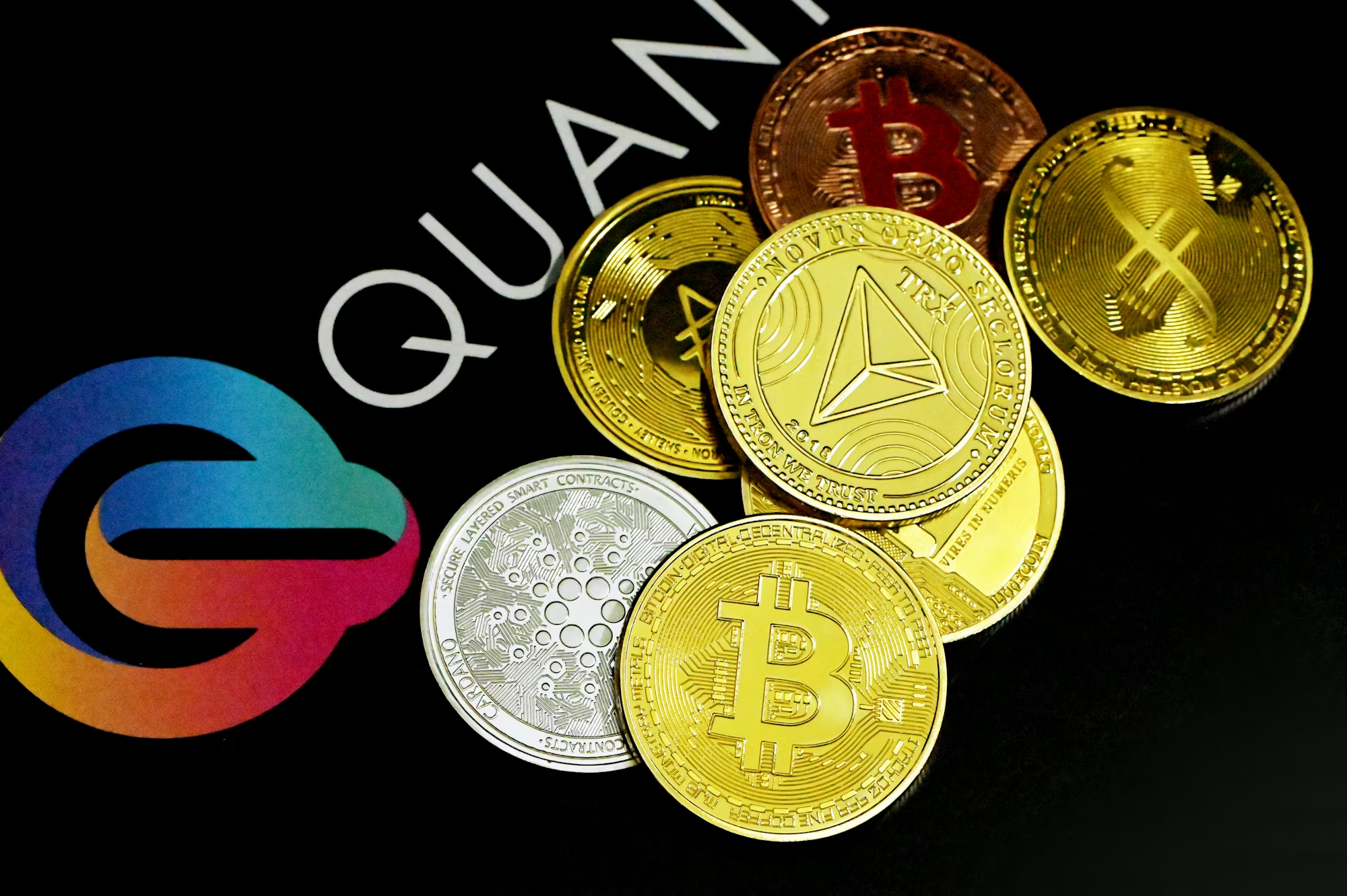
Decentralized Finance, commonly known as DeFi, has emerged as a groundbreaking concept within the cryptocurrency ecosystem. It represents a shift from traditional financial systems, providing a decentralized, open-source alternative that empowers individuals and eliminates the need for intermediaries such as banks. With the rise of blockchain technology, DeFi is rapidly changing how we think about finance, investing, and economic interactions. This article will delve into the fundamentals of DeFi, its various applications, and its potential to revolutionize the financial landscape.
At its core, DeFi encompasses a wide range of financial services built on blockchain technology. These services include lending, borrowing, trading, and earning interest on digital assets, all executed without traditional financial institutions. By utilizing smart contracts—self-executing contracts with the terms of the agreement directly written into code—DeFi platforms automate processes, making them more efficient and transparent.
One of the most significant innovations in the DeFi space is decentralized lending and borrowing. Traditional banks typically act as intermediaries in these processes, setting interest rates and determining eligibility. In contrast, DeFi platforms allow users to lend their cryptocurrencies to others in exchange for interest, while borrowers can access funds without the traditional credit checks. This democratization of access to capital enables individuals to engage in financial activities that may have previously been unavailable to them, fostering greater financial inclusion.
For instance, platforms like Aave and Compound have gained popularity for their user-friendly interfaces and innovative features. Users can deposit their cryptocurrencies into liquidity pools, allowing others to borrow those funds. The interest earned is often higher than traditional savings accounts, making DeFi lending an attractive option for individuals looking to grow their assets. Additionally, users can withdraw their funds at any time, providing a level of liquidity that is often lacking in traditional finance.
DeFi is also making waves in the realm of trading. Decentralized exchanges (DEXs) enable users to trade cryptocurrencies directly with one another, eliminating the need for centralized intermediaries. Uniswap and SushiSwap are two well-known DEXs that utilize automated market-making (AMM) protocols, allowing users to swap tokens easily while providing liquidity in exchange for transaction fees. This model not only enhances security by reducing the risk of hacks associated with centralized exchanges but also allows for greater privacy and control over one’s funds.
The growing popularity of DeFi has attracted attention from both retail investors and institutional players. As more people seek out alternatives to traditional finance, DeFi projects have begun to flourish. Investors are drawn to the potential for high returns, while institutions are exploring how to integrate DeFi solutions into their existing frameworks. This convergence of traditional finance and DeFi could lead to innovative financial products that blend the best of both worlds.
However, the rapid growth of DeFi also brings challenges and risks. The lack of regulation in this space can lead to vulnerabilities, including smart contract bugs, hacking incidents, and potential market manipulation. Users must exercise caution when participating in DeFi protocols, conducting thorough research and understanding the associated risks. Many platforms are working to enhance security measures, but the decentralized nature of these projects makes complete risk elimination challenging.
Another concern is the environmental impact of DeFi, particularly in relation to Ethereum, the blockchain most commonly used for DeFi applications. Ethereum’s current proof-of-work consensus mechanism requires significant energy consumption, raising questions about the sustainability of these operations. However, the ongoing transition to Ethereum 2.0, which aims to implement a proof-of-stake mechanism, holds promise for reducing energy consumption and improving the overall efficiency of the network.
Despite these challenges, the future of DeFi appears bright. As technology continues to advance and new solutions emerge, the potential for decentralized finance to disrupt traditional banking and investment models is immense. DeFi has already begun to democratize finance, enabling individuals to take control of their financial futures without relying on intermediaries.
Moreover, DeFi’s transparency is a significant advantage over traditional finance. Every transaction on a blockchain is publicly recorded, allowing users to verify and audit activities easily. This transparency fosters trust and accountability within the financial ecosystem, as participants can monitor the flow of funds and assess the performance of various protocols.
In addition to lending and trading, DeFi is also expanding into areas such as insurance and asset management. Decentralized insurance platforms allow users to purchase coverage for specific risks without going through traditional insurance companies. These platforms utilize smart contracts to automate claims processing, making it more efficient and transparent. Similarly, decentralized asset management protocols enable users to create and manage portfolios based on their risk preferences and investment strategies, all while retaining full control over their assets.
Education will be crucial in driving the adoption of DeFi. As more individuals learn about the benefits and risks associated with decentralized finance, they will be better equipped to participate safely in this evolving landscape. Many organizations and platforms are working to provide educational resources, tutorials, and community engagement opportunities to help users navigate the world of DeFi.
In conclusion, decentralized finance represents a transformative shift in the financial landscape, offering innovative solutions that empower individuals and promote financial inclusion. From lending and trading to insurance and asset management, DeFi is reshaping the way we interact with money. While challenges remain, the potential for growth and innovation in this space is significant. As technology continues to advance and more users engage with DeFi, we may witness the emergence of a new financial era that prioritizes accessibility, transparency, and user control.